Showing posts with label Shimer College history. Show all posts

Monday, August 05, 2013

The tree that is not one


This photo, kindly furnished by Isabella Winkler, shows a nearby tree neatly reflected behind the new "Shimer College" lettering at the Admissions entrance:


The reflected tree reminds me of something I noticed when I was last walking around the outside of the Shimer building: that in summer, the Chicago campus is not such a gray and dreary place at all.  The flourishing greenery actually gives an almost human touch to the modernist angles of the old Institute of Gas Technology.

But the reflection also uncannily recalls the opening sequence of the recent Shimer video:


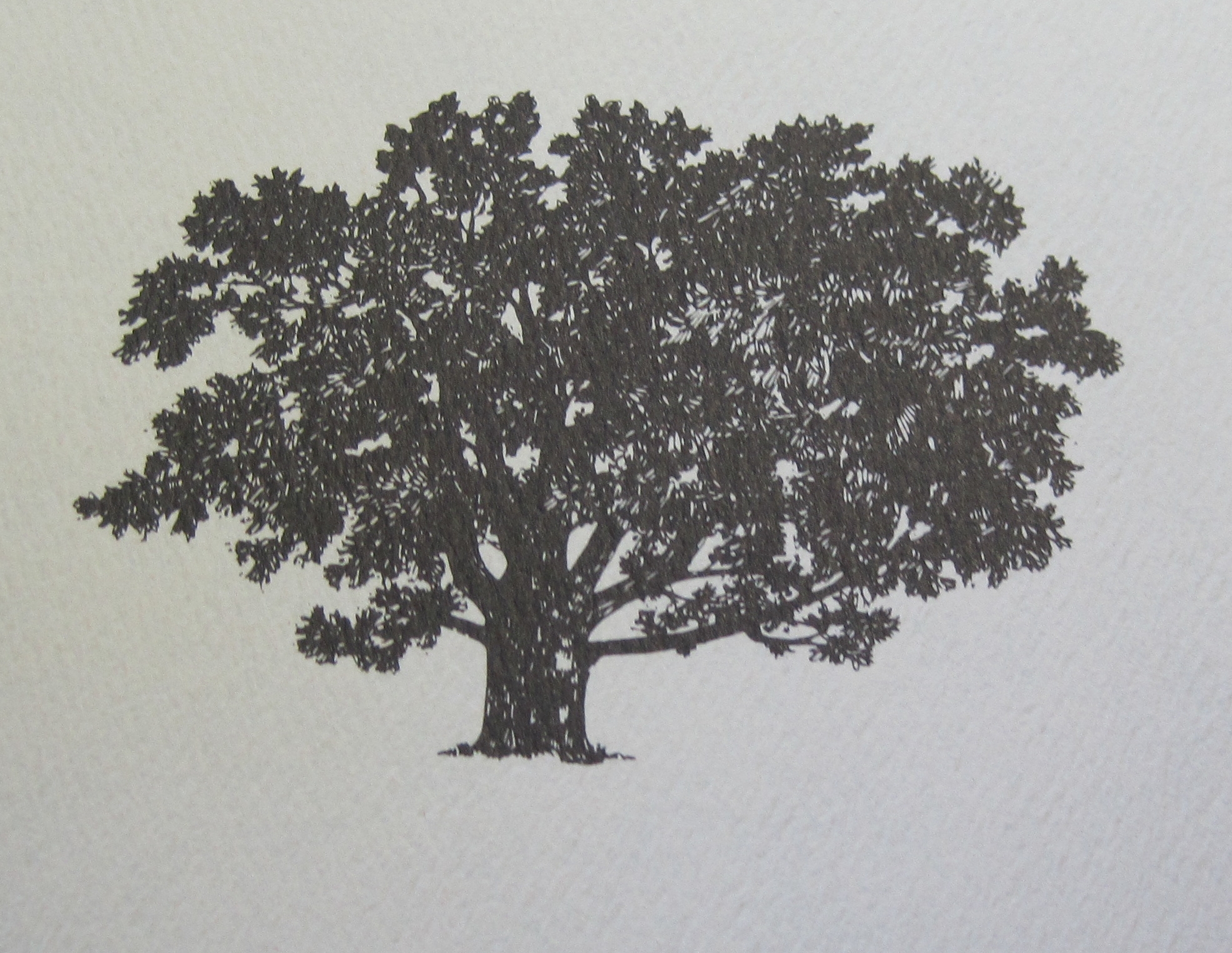
That tree, of course, is (or is intended to represent) the tree of the Shimer logo:


But whence comes the tree of the Shimer logo?  It first emerged in the early 1970s; here it is in the 1973 catalog:


There appears to be some dispute as to exactly which tree that is.  In shape it most resembles an oak, and it may have been modeled on a large oak [or maple] that grew on the Shimer golf course in Mount Carroll.  On the other hand, contemporary reports indicate that the Graduation Elm -- which was in the final throes of Dutch elm disease by 1971, when the logo first emerges -- had an unusually oak-like shape.

For my part, then, I prefer to think that it is the Graduation Elm: a noble tree that had the wisdom to leave Shimer before Shimer left it.


When I attended Shimer in Waukegan in the late 1990s, there were a number of delightful trees on the campus, which, by then, had grown into a real campus (or pretty close) with a quad and everything.  But there were many years in the Waukegan period when the "campus" consisted only of the 438 building.  And although the sideyard of 438 did boast a couple of respectable pines, it didn't have any that were anything like the tree of the logo, or even the sort of tree that you can hang out in the branches of, as we had by the 1990s.  Shimer had left all its trees behind.

What could the tree logo represent, then, but a reminder of everything that had been sacrificed to keep this school going?  As students, we sometimes called the Shimer tree "the Tree of Knowledge."  But perhaps a better label would be "the Tree of Loss."  And so it remains today: no real thing, but a stray image caught in the glass, a reflection seen through tears. 

Our comrades at Marlboro College have a mascot known as the "Fighting Dead Tree." Perhaps this is another case of convergent evolution between these two peculiar schools.  Our trees die, or are left behind, but we keep them as our symbol: either our shield against the madness of the world, or a marker of our shared insanity, whichever you prefer.

It is our losses that give us the strength to fight. 

Tuesday, July 23, 2013

The forgotten crisis of 1927


In a recent post, I dropped the year "1927" into the familiar list of crisis years in Shimer College history.  I was, I'll confess, hoping that somebody would ask "what happened at Shimer in 1927?"  Nobody did, but I'm not going to let that stop me from answering the question anyway.

The December 1926 issue of the Frances Shimer Record, recently uploaded to archive.org (and embedded below), opens with an urgent communiqué from Shimer's second president:
With the opening of the New Year, Frances Shimer School faces a crisis and, for the first time in its history of over seventy-three years, the School is making a financial appeal to its constituency for endowment and buildings. The need in which the institution finds itself is due to no fault on the part of the administrative officers.  The School was never so well equipped as it is today, nor the attendance larger.  Moreover, the institution has no debts and its income has for years been in excess of its expenditures.

Since 1909 the School has continuously and in all particulars met the exacting standards of the North Central Association of Colleges and Secondary Schools.  Now, however, this same organization has voted that beginning with the year 1927, all Junior Colleges in order to remain on its accredited list must have an annual income of not less than $10,000 from stable sources over and above the income from student fees.
(For context, one calculator indicates that this is equivalent to $132,000 in today's dollars in terms of purchasing power, or $1.64 million in terms of economic power.)

I believe this is the first crisis (and far from the last) that was directly precipitated by Shimer's accreditor, the North Central Association.  I cannot recall ever having heard of this particular crisis, and it seems to have been weathered easily enough.  In the great historical sweep of Shimer crises, perhaps, it hardly rates a mention. But it certainly set a pattern, which has continued to the present day, of the NCA imposing arbitrary thresholds unrelated to educational quality.


Then as now, the NCA calls the tune and Shimer must dance. And then as now, the changes forced by the accreditor are not necessarily bad: Shimer weathered the Great Depression surprisingly well, and some of that may be thanks to the expansion of its funding base that the NCA required.  The same may be true of other NCA-forced changes over the years. (Without the accreditors' carping, for example, Shimer might never have had President Albin Bro, Ph.D., and thus never have become the Great Books school of today.)

At the same time, it's hard to overlook the utter moral bankruptcy of the system.  In making dictates of this sort, which have become rather commonplace since 1926, the NCA is not merely laying out best practices in higher education administration.  It is not merely suggesting (as a reasonable person might) that students should consider carefully before attending a school that might abruptly cease to operate. It is saying that academic qualifications from an institution with less than a given level of financial support should not be recognized.  Students from nonconforming schools will be mercilessly shut out, no matter how sound their academic work.  And at Shimer, we know that this is not an empty threat.

In the American accreditation system, its seems, regulatory capture converges in a particularly ugly way with the use of higher education as a mechanism of socioeconomic sorting.  The crisis of 1927 gave Shimer its first glimpse of this fact, but regrettably far from its last.


Sunday, July 21, 2013

Some resources for Shimer College curricular history

Following up on the earlier post on curricular history, I thought it would be useful to collect some of the online resources for understanding Shimer's own curricular development from the 1940s to today.  Many of these resources have only recently become available, and hopefully more will become available in the future, so I'll try to keep this list updated from time to time.  

New resources may also become available soon as part of Stuart Patterson's upcoming course on "Why & What Should We Read?", which will touch on Shimer curricular history in the context of larger historical trends and conversations.

I'm always looking for new materials to add to the archive, so if by any chance you have resources that you'd like to share, please do get in touch. I can be reached at samueljhenderson@gmail.com.

1940s-1950s
1947-1948 catalog, the first catalog to present the "Shimer Plan", a four-year curriculum foreshadowing the full Great Books curriculum of later years (those so inclined can follow the clickpath from here through all the Shimer catalogs of the Academy period, 1896-1950).
1951-1952 catalog , the first catalog published within the "Great Books period" as usually understood

1960s "The Shimer Plan" (from 1960 student handbook):
"Shimer and the Humanities" (Hirschfield, 1965)
"Shimer and the Social Sciences" (Keohane Sr., 1965)

1970s 
Moon memo 
"Shimer Curriculum Under Review" (with perspectives by Moon, Beeson, and Sakurai)
November 1976 Symposium

Saturday, July 20, 2013

Dangerously optimistic?


Over on the Shimer.edu redesign blog (previously), there's some controversy about the tagline used on the mockups of the new website: "Dangerously Optimistic Since 1853":

Dangerously optimistic since 1853

A lot of people don't like it, and I can understand why. It doesn't seem to say anything about Shimer's core product—whether you call that dialogal education, Great Books pedagogy or what have you. On top of that, it lends itself to unfavorable interpretations. Can Shimer really afford to emphasize its own precariousness in this way? Even the old and thoroughly-reviled tagline "the Great Books College of the Midwest" at least suggested stability

But even though I'm the sort of person who normally hates everything, this new tagline really appeals to me. I'll try to explain why (see also Adam O.'s eloquent comment).

As much as Shimer stands for the great books (and for smallness, intentional community, dialogical pedagogy, and various other good things), it stands also for a certain glorious bloody-mindedness without which the school's existence—beyond 1853, or 1855, or 1857, or 1895, or 1898, or 1906, or 1927, or 1949, or 1957, or 1973, or 1977, or 1979, or 1990, or 2010, inter alia—would be unthinkable.

There is a reason that Shimer's people have always kept going, in the face of challenges that would have  made any well-adjusted institution decide to meekly curl up and die. Putting that reason into words can be challenging, but it's there all the same.

"Dangerously Optimistic" wouldn't have occurred to me as a way of summarizing this, but I think it works quite well—and certainly better than obvious alternatives like "Telling the World To Go Fuck Itself Since 1853," which for one thing is a bit too long.
Yes. 
.
For a long time, there has been an understandable desire to  keep this crazier side of Shimer safely tucked in the attic—when that craziness isn't needed to repel the latest existential threat, of course.  But this has left me and many others with a strange sense of contradiction between the community that we identify with and the school's outward face (which is also the face presented to alumni). Some contradiction between the inward and outward faces of Shimer is inevitable, but there's been something strangely bloodless about the way that Shimer has presented itself for many years, as if Shimer were trying to pretend that it had become a scaled-down version of an otherwise normal college.

This isn't good for Shimer or its people, and least of all for students who come to Shimer expecting something completely different from what they find.

Does the "dangerously optimistic" tagline emphasize precariousness, even foolhardiness? OK, sure. But Shimer has tried over and over to try to pretend that it hasn't spent 1.6 centuries dancing (flawlessly) on the volcano's brim, only for this pretense to be given the lie when the music starts again. This is stupid and self-defeating. We need to find ways of more effectively integrating this underlying strength in the outward-facing version of Shimer.  We cannot afford to keep turning Shimer's strengths into weaknesses.

In the end, I trust that the choice in this matter rests with the people of Shimer College, as it should.

But for my part, I think this is a good tagline.

Friday, May 10, 2013

The Founding of Shimer College: A Tale of Two Tales

Frances Wood Shimer and Cindarella Gregory in 1869
 To anyone who has been associated with Chicago's Shimer College, the story of its founding is probably familiar: in May 1853, two young teachers, Frances Wood and Cindarella Gregory, came out from upstate New York to the tiny frontier town of Mount Carroll, Illinois, to start a "seminary" (not entirely unlike a high school) that had been chartered by the state legislature the year before. Nominally governed by a Board of Trustees but effectively run by the two teachers, the school moved into its own building in 1854. A few months after that, the struggling school was given up for dead by its Trustees, and placed fully into the hands of Misses Wood and Gregory.

That is the well-worn tale of how this plucky little college got its start. It is not wrong, and can be verified by consulting contemporary newspaper accounts, as well as the letters and journal of Miss Wood herself. But it isn't the only story.

The second story of Shimer's founding varies a bit, but goes something like this: The overambitious townspeople of Mount Carroll started a seminary in 1852, but were unable to get it off the ground -- a common pattern across the Old Northwest at this time. In 1853, completely independently, Misses Wood and Gregory arrived in town and started a private school. Their school prospered, and observing the teachers' administrative prowess, the despairing Trustees asked them to take over the Trustees' stillborn school; the teachers graciously accepted the charge.

To be sure, this second story is wrong. Wood and Gregory were part of the Mount Carroll Seminary from the very day (May 11, 1853) when they taught their first class. Yet we can find this story as far back as 1857, signed by none other than John Wilson, who had chaired the Board of Trustees during the school's difficult first months of operation. And we find it again, in 1869, in a report submitted to the Illinois Superintendent of Public Instruction-if not directly from the pen of Mrs. Shimer (née Wood) herself, surely at least prepared under her close supervision.

So, why is this utterly nonfactual story coming from such reliable sources?

We may find the beginning of the answer in a key distinction in 19th-century private education: between "venture" or "select" schools (often little more than one or two teachers hanging out a shingle) and "proper" state-chartered institutions overseen by boards of trustees. (For discussions of this, see e.g. Tolley 2002, Katz 1975.) Agency and gender come into this distinction as well: a select school would naturally be governed by its teacher or teachers, often female; but a proper seminary or college was governed by its almost invariably male trustees.

Thus, when the Trustees relinquished control in 1855, the Mount Carroll Seminary found itself in a treacherous position. Abandoned by its Board, it could only move forward under the direct governance of its teachers. Yet if it was perceived as merely a teacher-run school, it would soon lose the prestige it needed to survive and grow. It needed to somehow be both things at once: a joint proprietorship and a "proper" school working to the highest standard.

Understanding this contradiction, we can understand the two contradictory stories of Shimer's founding: if the narrator wanted to emphasize the prestige of being a proper state-chartered institution, the simple factual narrative served just fine. But when emphasizing the agency and authority of Misses Wood and Gregory, the second narrative served better - and for good measure, captured the real power dynamics of the first years much more accurately.


It is thus unsurprising that the second narrative first emerges in 1857, when the town was wracked by scandalous accusations against Wood and Gregory, and the Seminary's supporters needed to shore up their moral authority (for more on this, see Malkmus 2003).

There is an underlying tension here, between Shimer as an institution (embodied by the first narrative) and Shimer as the work of its people (embodied by the second narrative), that can be traced through all of the school's 160 years. From time to time - as in 1967, or 2010 - when things have become a little bit unbalanced, a crisis has ensued. In the present day specifically, the Trustees' legal authority stands in tension with the "moral suasion" exercised by Shimer's radically democratic Assembly. And just as with the two contradictory tales of Shimer's founding, we could construct two entirely contradictory (but equally accurate) accounts of the college as it exists today.

This suggests that Shimer's ability to strategically balance between two contradictory identities has played a key role in this tiny school's improbable 16-decade run. This may also help to explain why Shimer has also remained so very small for all these years: this kind of ambiguity becomes harder to sustain when expanding beyond the human scale.


Works mentioned